
Articles · Maintenance
Paver Repair vs.
Replace
By Augusto Lodos, Owner & Executive Commercial Director · September 26, 2026
A driveway can look rough and still be a repair. It can look almost fine and already be a replacement waiting to happen. The way damage looks tells you where it surfaced, not where it started. The real question is whether it's isolated or systemic — and why the honest answer to that depends on who you're asking, not just what they're looking at.
The Question Everyone Asks Wrong
"Is this bad enough to replace?" is the wrong question. A driveway can look rough and still be a repair. A driveway can look almost fine and already be a replacement waiting to happen. The way it looks tells you where the damage surfaced. It doesn't tell you where the damage started.
The real question is simpler, and it's the one this article actually answers: is the problem isolated, or is it systemic? Everything else follows from that one distinction.
The Test That Actually Matters
Isolated damage looks like this: one section is sunken, cracked, or uneven, and the rest of the surface is flat and solid. There's usually a reason you can point to — a tree root pushing up from underneath, a downspout that's been dumping water on the same six square feet for years, one paver that took a hard impact. The base everywhere else is doing its job. One spot isn't.
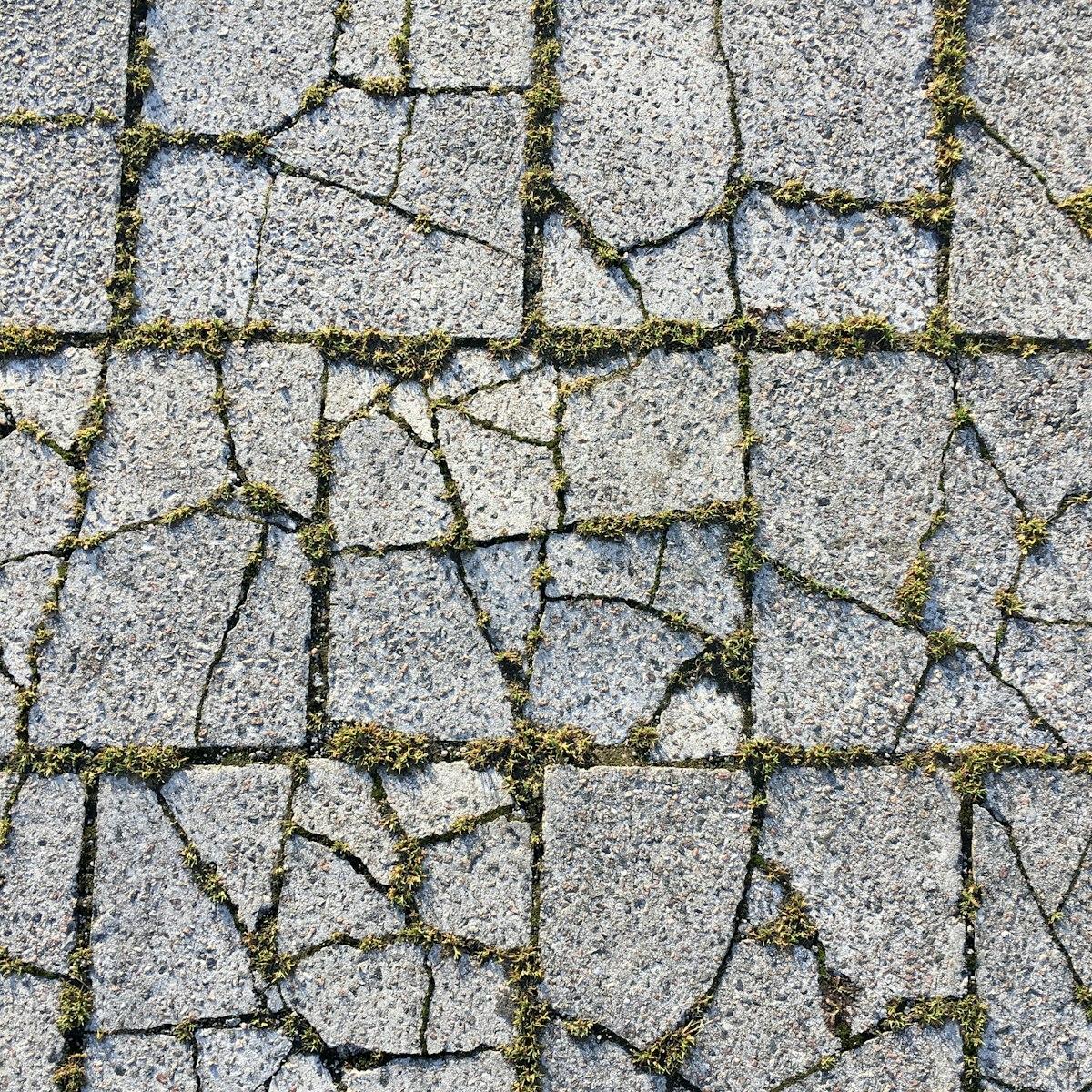
Systemic damage looks different: multiple areas are failing, not just one. The whole surface has a gentle rise-and-fall instead of lying flat. Problems keep appearing in new spots even after you've fixed the old ones. That's not bad luck repeating itself — that's the base underneath the entire surface losing integrity, and it will keep surfacing as new "isolated" problems for as long as you keep treating them one at a time.
This matters because pavers fail exactly the way we've written about before: one section at a time, not all at once. That's the material's advantage over concrete — but it also means a systemic base failure can disguise itself as a string of small, unrelated repairs for years before anyone adds them up.
When Repair Is the Right Call
If the damage is genuinely isolated — one section, a clear cause, a solid base everywhere else — repair is not a compromise. It's the correct answer. That means pulling the affected pavers, fixing whatever caused the problem (rerouting the downspout, cutting the root, replacing the base material in that section), and resetting the pavers with fresh joint sand. Done properly, a repaired section holds exactly as well as the surface around it, because it's built the same way the rest of it was.
Anyone who tells you every crack means a full replacement is either inexperienced or padding the invoice.
When Repair Is Just Delaying Replacement
Here's the pattern that actually costs people money: the same spot fails, gets patched, and fails again within a year or two. Each time, the fix looks reasonable on its own. Added up over five years, it's often more expensive than the full replacement would have been — and the surface never actually got better, because the patch was never the problem. The base was.
A repeated failure in the same location is systemic damage wearing an isolated-damage costume. The honest move at that point is to stop patching and address the base across the affected area, even though that's a bigger job than the fix that came before it.
Why This Answer Depends on Who You Ask
This is the part most articles on this topic skip, and it's the part that actually matters: the repair-or-replace call isn't neutral advice. It's also a business decision for whoever's giving it. A contractor who profits more from bigger jobs has a reason to call isolated damage systemic. A contractor who profits from repeat service calls has a reason to keep patching a problem that needs a real fix. Neither is necessarily lying to you — but neither is answering from a position with nothing to gain either way.
That's exactly why the test above is worth knowing yourself, before anyone gives you a recommendation. You don't need to become an expert. You need to be able to tell whether what you're looking at is one section or a pattern.
What We Do Differently
When we're asked to look at an existing surface — ours or someone else's — we check the base in the affected area before we recommend anything. If it's isolated, we say so, and we quote the repair. If it's systemic, we show you why: where else it's already showing up, or where it's about to. We'd rather tell you a repair won't hold than sell you one and see you again in eight months with the same problem in a different spot.
That's not because we don't want the smaller job. It's because a repair that fails again isn't a favor to anyone — including us.
The Short Version
One section, one clear cause, solid base everywhere else: repair it. Multiple areas, a pattern, or the same spot failing more than once: the base needs real attention, not another patch. If you're not sure which one you're looking at, that's exactly the question to ask before anyone touches a single paver.
More Articles
May 16, 2026
Top Pavers for Florida Homeowners: A Complete Guide
A complete guide to choosing the right paver material for Florida's demanding climate — from travertine and concrete to porcelain and natural stone.
May 16, 2026
Why Paving Is the Go-To Choice in Central Florida
How high-quality paving systems deliver durability, elegance, and long-term property value for residential and commercial properties across Florida.
May 16, 2026
The History of Paving in Florida: From Brick Streets to Modern Luxury Hardscapes
From St. Augustine's historic brick streets to Central Florida's modern luxury hardscapes — how Florida's paving tradition evolved over a century.
Get Started
Ready to transform your
outdoor space?
We visit your property, assess what's needed, and give you a full written quote within 24 hours. No pressure.