
Articles · HOA & Approvals
HOA Approval for Pavers
in Florida
By Augusto Lodos, Owner & Executive Commercial Director · November 1, 2026
In a Florida community with an HOA, replacing a driveway with pavers is a request to a committee, and the most common way a project goes sideways has nothing to do with the work. It's an incomplete application, a build that differs from what was approved, or no filing at all. Here's how the process works, what a complete submission includes, and where homeowners get caught.
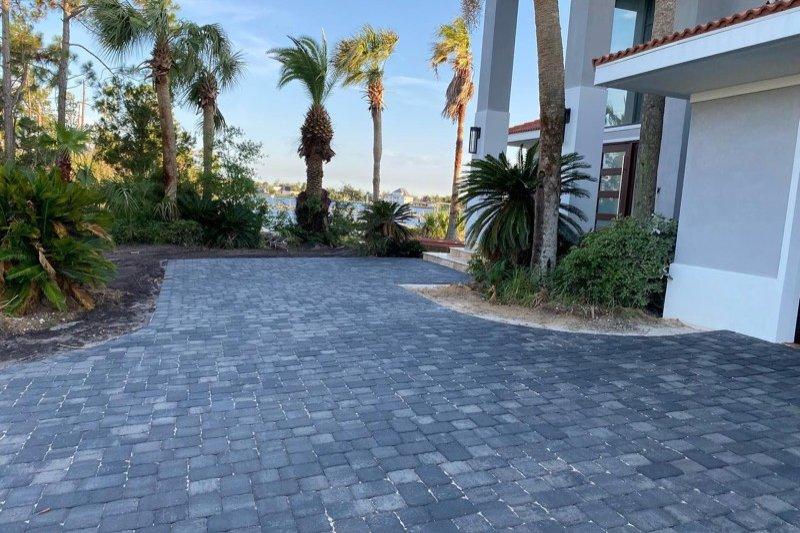
The Build Is Rarely the Hard Part
If you live in a Florida community with a homeowners' association, replacing a driveway with pavers usually isn't a decision you make alone. It's a request you make, in writing, to a committee. And the single most common way a paver project goes sideways has nothing to do with the work. It's an application that was incomplete, approved for one thing and built as another, or never filed at all.
Here's how the process generally works, what a complete submission looks like, and where homeowners get caught.
Why Pavers Need Approval at All
Most HOA declarations give an architectural review committee authority over exterior changes: paint, fences, landscaping, driveways. Swapping concrete or asphalt for pavers changes the color, texture and pattern of one of the largest surfaces on your lot, so it almost always counts as a material change, not a repair. Even a new walkway or patio can need sign-off.
Your community's declaration and published design guidelines are the real rulebook. They decide what needs approval, who reviews it, what standards apply, and how long the committee has to answer. Chapter 720 of the Florida Statutes sets the broader framework for HOAs, and it has been amended more than once in recent years, so read the current version or ask an attorney if a decision is in dispute. Don't rely on an article, including this one, for the legal detail.
What a Complete Submission Usually Includes
Every community differs, but committees tend to ask for the same core items:
- A completed application form. Often with the owner's signature, since the owner carries the responsibility for what gets built.
- A scale drawing or site plan. It shows the area being paved, dimensions, setbacks from property lines, and the pattern (running bond, herringbone, border).
- A physical material sample. Photos on a screen rarely survive a committee meeting. A real paver in the real color lets reviewers judge it in daylight.
- The manufacturer's specification. Product name, size, color and finish, so there's no ambiguity about what was approved.
- Contractor details. Some communities want a license and insurance on file before approval.
Incomplete is the usual reason for delay. A missing sample or drawing typically doesn't get a quick fix. It gets sent back, and the clock restarts.
The Calendar Is the Real Constraint
Committees often meet on a fixed schedule, commonly monthly, with a submission deadline ahead of each meeting. Miss the deadline by a day and you wait for the next one. The response time itself is usually set by your governing documents, so look it up rather than assuming.
That's why timing matters more than most owners expect. If you want a driveway done in the dry season, the approval has to be in hand before it. We cover the broader calendar in the best time to install pavers in Florida, and the short version is that the paperwork starts months before the crew does.
What Tends to Get Approved
Guidelines vary widely, but committees repeatedly look at the same things:
- Color and tone that sit inside the community's existing palette, rather than something that stands out against the neighbors.
- Format and pattern that suit the architecture. In traditional or historic-style communities, that often means brick-style formats instead of large modern slabs.
- Setbacks and drainage, since a new surface mustn't send water onto a neighboring lot.
- Consistency with the street. Many committees weigh what's already there.
If your community publishes a pre-approved palette or product list, start there. It's the fastest route to a yes.
Where Homeowners Get Caught
- Starting before approval. A verbal "that should be fine" isn't approval. Work done without it can be ordered corrected, and the cost lands on the owner.
- Building something other than what was approved. A slightly different color, a swapped format or a rotated pattern can put the job out of compliance, even if the crew thought it looked better. You signed the application, so the exposure is yours.
- Assuming a repair is exempt. Resetting a few sunken pavers is different from replacing the surface, but where the line sits depends on your documents. Ask before you assume.
- Missing a requirement outside the HOA. A city or county permit is a separate matter. We cover that in how to choose a paver contractor.
If the Answer Is No
A denial isn't always final. Ask for the reasons in writing, check them against the published guidelines, and see whether a different color or format would clear review. Many committees will tell you what they'd approve. If you believe a decision was unreasonable, the statute and your governing documents set out your options, and that's the point to talk to an attorney, not a contractor.
What to Ask Your Contractor
- Will you prepare the submission, or is that on me? Drawings, samples and specs should be part of the job, not an afterthought.
- Will you confirm the meeting date and deadline with the association? Last year's schedule is a guess.
- Do you build exactly what was approved? The right answer is yes, and that any change goes back through review.
- What happens if the committee asks for changes? You want a plan, not a shrug.
Communities with strict, pattern-book style review, such as Celebration, are where this process matters most, and it's why we prepare the submission as part of the job there. The same logic applies in other review-heavy communities like Windermere and Dr. Phillips.
The Short Version
Check your documents first. Submit a complete package: application, scale drawing, physical sample and manufacturer spec. Plan around the committee's meeting calendar, not around your ideal start date. Don't start until you have approval in writing, and build exactly what was approved. Do that and the approval process becomes a step on the calendar instead of a surprise.
More Articles
October 27, 2026
The Best Time to Install Pavers in Florida: Dry Season, Permits, and Booking Dates
Nothing freezes in Central Florida, but the job still has a season. Why the dry months give a paver base its best chance, and why the paperwork decides your start date before the weather does.
August 25, 2026
How to Choose a Paver Contractor in Orlando: 12 Questions That Matter
12 questions that actually separate paver contractors — not marketing language, but the specifics that tell you who's cutting corners before you sign anything.
October 9, 2026
Can You Put Pavers Over Existing Concrete in Florida? What Actually Decides It
"Can you put pavers over concrete?" Technically, yes. The real question is whether your slab has already proven it's stable enough to build on — and that's not something you can tell just by looking at it.
Get Started
Ready to transform your
outdoor space?
We visit your property, assess what's needed, and give you a full written quote within 24 hours. No pressure.